Ideal Additions Consulting & Training (IAC)
Ideal Additions Consulting & Training (IAC)
Why Choose IAC for Institutional Consulting?
Integration Across Consulting Pathways
We connect ISO management-system implementation and certification readiness with governance, risk management, and institutional performance within one integrated approach.
Diagnosis Before Recommendation
We assess the current state and analyze gaps and underlying causes before defining priorities and designing the engagement scope according to the organization’s context and level of maturity.
Implementation Before Formal Documentation
We design policies, systems, and practical tools and connect them with responsibilities, operations, monitoring, and continual improvement.
Usable and Trackable Deliverables
We develop frameworks, policies, registers, performance indicators, and action plans that help organizations monitor progress and build on results.
Our Consulting Pathways
IAC’s consulting services span six pathways, which may be delivered independently or as part of an integrated engagement, depending on the organization’s needs and priorities.
Management Systems and International Standards Consulting
ISO Implementation and Certification Readiness
IAC supports companies, factories, and institutions across Jordan and the Arab region in developing effective, integrated management systems aligned with internationally recognized standards.
We design and develop management systems that connect ISO requirements with day-to-day operations while reflecting the organization’s sector, operating environment, and applicable regulatory requirements.
Standards and frameworks covered by this pathway include:
- ISO 9001: Quality Management Systems.
- ISO 45001: Occupational Health and Safety Management Systems.
- ISO 14001: Environmental Management Systems.
- ISO/IEC 27001: Information Security Management Systems.
- ISO 22000: Food Safety Management Systems.
- ISO 50001: Energy Management Systems.
- ISO 22301: Business Continuity Management Systems.
- ISO 31000: Risk Management Guidelines.
- ISO 37001: Anti-Bribery Management Systems.
- ISO 21001: Management Systems for Educational Organizations.
- ISO 13485: Quality Management Systems for Medical Devices.
- ISO 55001: Asset Management Systems.
- ISO 41001: Facility Management Systems.
- ISO 10002 and ISO 10004: Complaints Handling and Customer Satisfaction.
- ISO 26000: Social Responsibility Guidance.
Important Note:
Implementation requirements and certification applicability vary by standard. IAC does not issue ISO certificates. Where certification applies, certificates are issued by independent certification bodies following their assessment processes.ISO 26000, ISO 31000, ISO 10002, and ISO 10004 provide guidance and are not designed as certification standards.
Examples of What This Pathway Includes:
- Assessing the current state and identifying gaps and priorities through a structured gap analysis.
- Designing the management system and developing its documentation and implementation tools.
- Developing Integrated Management Systems (IMS) and connecting them with operations, risks, and performance indicators.
- Conducting internal audits and supporting readiness for assessment by an independent certification body.
Expected Institutional Outcome:
A management system integrated with day-to-day operations that clarifies procedures, responsibilities, audit mechanisms, monitoring, and continual improvement—rather than being limited to documentation or temporary preparation for an external assessment.
Governance and Institutional Policies
We design and implement governance frameworks that structure authorities, decision-making pathways, and oversight mechanisms while connecting institutional policies with operations and applicable regulatory requirements.
Examples of What This Pathway Includes:
- Designing governance frameworks, organizational structures, and oversight committees.
- Drafting and updating institutional policies.
- Defining decision rights and approval and escalation pathways.
- Developing authority and responsibility matrices and aligning them with applicable regulatory requirements.
Expected Institutional Outcome:
Clearer governance, actionable policies, and well-defined authorities and decision-making pathways that help reduce conflicts and ambiguity during implementation.
Institutional Performance and Strategic Planning
Examples of What This Pathway Includes:
- Developing strategic plans and reviewing the organization’s vision, mission, and priorities.
- Designing Balanced Scorecards and key performance indicators (KPIs).
- Analyzing the internal and external environment in the context of the organization and its sector.
- Translating strategic objectives into operational programs and initiatives.
- Establishing mechanisms for performance measurement, reporting, and review.
Expected Institutional Outcome:
An actionable plan, clear performance indicators, and a structured connection between strategic direction, initiatives, intended results, and performance-monitoring mechanisms.
Risk Management and Compliance
We develop practical risk management frameworks that connect risks with strategy, performance, resources, and decision-making rather than treating risk management as a standalone register.
Examples of What This Pathway Includes:
- Designing an Enterprise Risk Management (ERM) framework.
- Identifying and assessing strategic, operational, compliance, and reputational risks.
- Developing risk registers, risk matrices, and risk treatment and response plans.
- Defining risk appetite and establishing escalation and monitoring mechanisms linked to planning, performance, and business continuity.
Expected Institutional Outcome:
Clearly classified and assessed risks, defined responsibilities, trackable treatment plans, and structured information that supports informed decision-making and institutional preparedness.
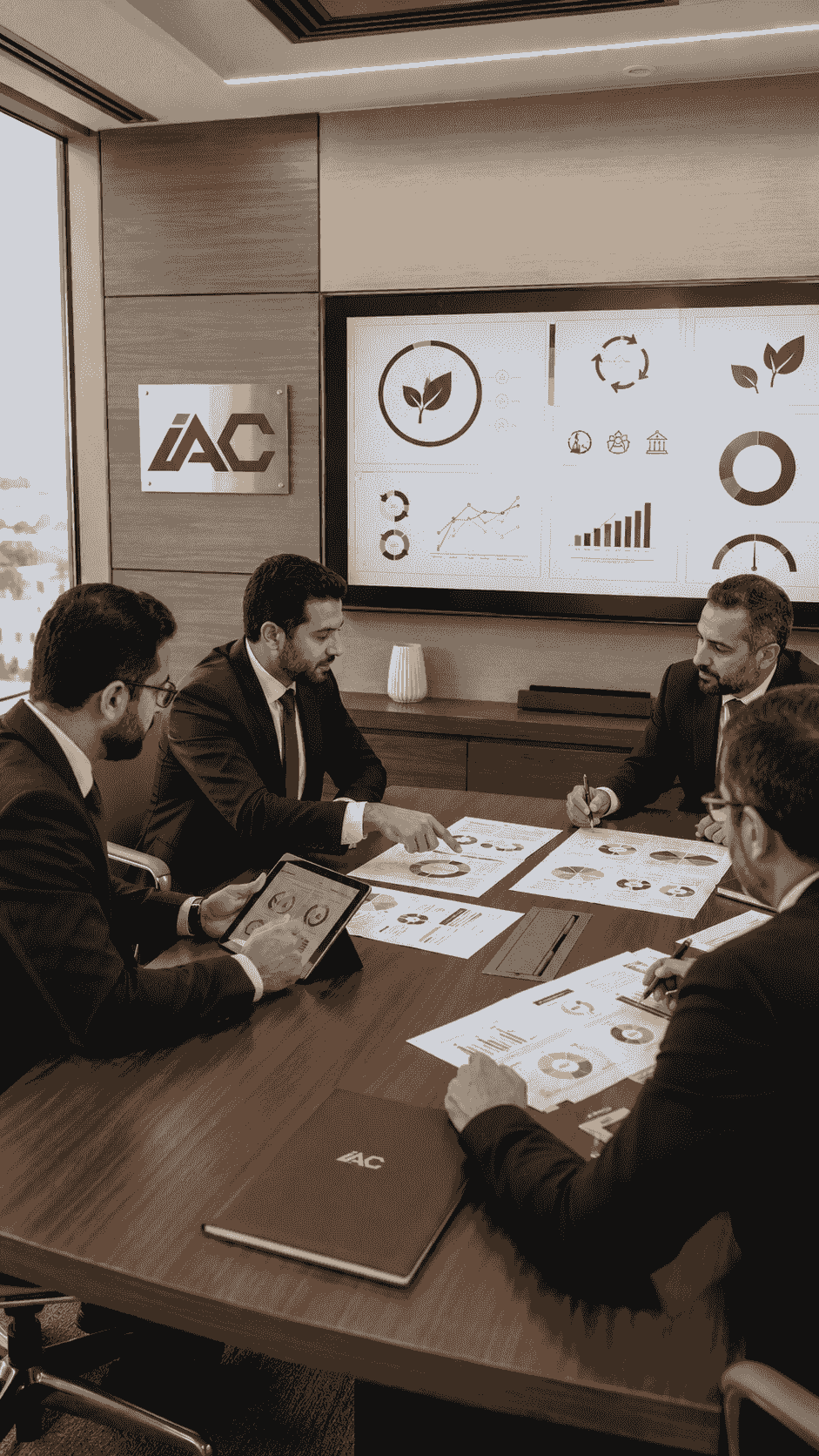
Sustainability and Corporate Responsibility
We structure sustainability and corporate responsibility priorities and connect them with governance, resource efficiency, institutional performance, and monitoring mechanisms.
Examples of What This Pathway Includes:
- Assessing the current state and identifying stakeholders and priority issues.
- Developing a sustainability framework and environmental, social, and governance (ESG) practices.
- Establishing objectives and indicators and connecting sustainability with resources and operations.
- Developing monitoring and reporting mechanisms and equipping the responsible teams to implement them.
Expected Institutional Outcome:
A clear sustainability direction, trackable priorities, indicators, and responsibilities, and a structured connection between initiatives, decision-making, and institutional performance.
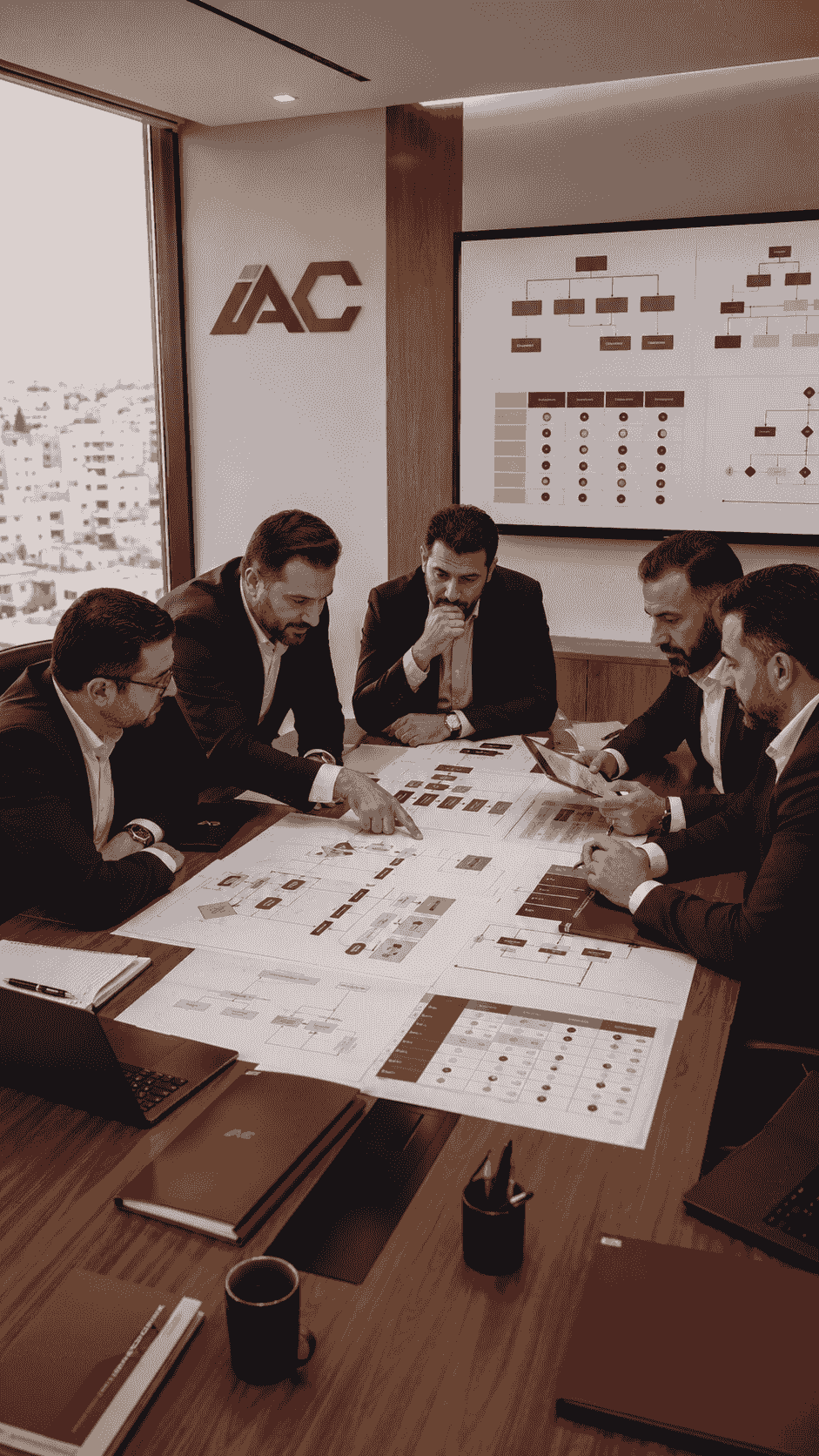
Organizational Restructuring and Design
We review and develop operating models and organizational structures to support institutional growth.
Examples of What This Pathway Includes:
- Analyzing structural gaps, overlapping responsibilities, and role duplication.
- Redesigning the organizational structure and developing responsibility assignment matrices (RACI).
- Developing a phased organizational transition and change management plan.
Consulting Engagement Models and Expected Value
The form of our engagement varies according to the findings of the initial diagnosis and the organization’s priorities. It may include:
- Delivering a specialized consulting service within a specific pathway, such as ISO 9001 implementation and certification readiness.
- Managing an integrated development project combining governance, risk management, and institutional performance.
- Reviewing an existing management system and training internal teams to operate and sustain it.
Expected Institutional Value:
Greater clarity in authorities and responsibilities, practical and implementable policies, improved readiness for external assessments and applicable certifications, and a structured connection between performance indicators and results.
Consulting Services Tailored to Your Organization’s Needs and Operating Context
Our consulting services are designed around your organization’s actual needs and circumstances—not standardized solutions or ready-made templates.
We begin by understanding the current state, operating context, and objectives. We then examine the gaps and priorities to identify the most appropriate consulting pathway or combination of pathways.